
Colonial Lahore: A Post-dated Letter for Future Generations

In this book, “Colonial Lahore”, Professor Aziz ud Din Ahmad has encapsulated a transformational century of Lahore in a rhapsodic note which is simultaneously a panegyric tribute and a pyrrhic elegy. The city of Lahore is to this part of the world what cities like Paris, St. Petersburg, London, Delhi, Shanghai, Vienna and New York are to their respective lands. John Milton included Lahore in his inventory of the finest cities of the world in “Paradise Lost”. Lahore has had the unenviable status of being the doorway to India for invaders hailing from Central Asia who crossed River Ravi before trampling upon farther parts of India. Lahore witnessed periods of prosperity and plunder at regular intervals for centuries without surrendering the resilient spirit of its inhabitants, the lively character of its social fabric and the luster of its architectural glory. It was this amazing culture of Lahore that elicited famous Persian couplet from 17th century Mughal Empress Nur Jehan who wrote while incarcerated at Lahore after the death of her husband emperor Jehangir:
لاہور را بہ جان برابر خریدہ ایم
جاں دادہ ایم و جنت دیگر خریدہ ایم
(I have acquired Lahore at the cost of my life. I have paid with my life to buy this alternative paradise.)
Three centuries later, famous Urdu poet Nasir Kazmi left his ancestral city of Ambala (Now Haryana – India) and moved to Lahore in the catastrophic days of the partition of the British India. He was immediately enchanted by the socio-cultural beauty of the city and wrote:
شہر لاہور تری رونقیں دائم آباد
تیری گلیوں کی ہوا کھینچ کے لائی مجھ کو
(O’ city of Lahore, may you prosper forever; the welcoming breeze of your lanes and alleys has lured me here.)
Like all historic centers of human habitat, Lahore, too, has a long tradition of writers and historians compelled to record the history of this hub of art, craft, trade and governance. There is a long list of Urdu book entirely devoted to the city of Lahore. In English language, Syad Muhammad Latif wrote “Lahore: Its History, Architectural Remains And Antiquities” in 1892. Henry Raynor Goulding serialized his impression of Lahore in the Civil & Military Gazette in 1922. A compilation of his work was published in 1976 under the title of “Old Lahore: Reminiscences of a Resident”. Maulvi Muhammad Saeed, former editor of Pakistan Times, published “Lahore: A memoir” in 1989. Former Indian diplomat Pran Nevile’s “Lahore: A Sentimental Journey” appeared in 1992 and went on to become his magnum opus. In 1993, Fakir Syed Aijazuddin captured the architectural evolution of modern Lahore in his book, “Lahore – Illustrated Views of the Nineteenth Century”. More recently, Ian Talbot and Tahir Kamran co-authored “Colonial Lahore: A History of the City and Beyond” in 2017.
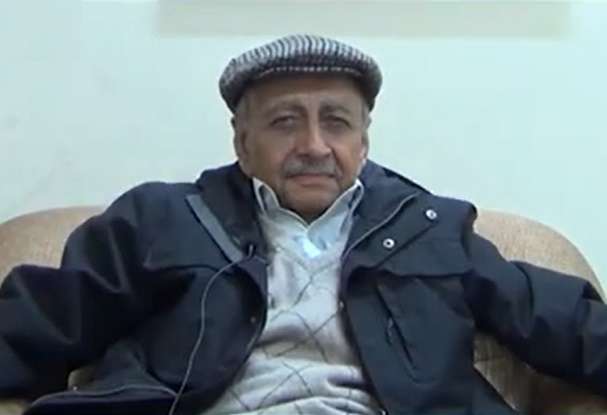
Before I write a few words about the author of the book in your hands, I must express my deepest respect for Professor Aziz ud Din Ahmad. I am grateful to life for furnishing me the opportunity to know and learn from Professor Aziz ud Din Ahmad. Professor Aziz is one of the most respectable intellectuals, visionary political leaders and upright journalists of the nation. My generation is indebted to him and his handful of companions for the upholding the flag of justice, reason, freedom and human rights under the worst of the conditions. Born at Kangra (now Indian state of Himachal Pradesh) in 1936, Prof. Sahib (as he is known endearingly) moved to Lahore at the age of four. He received all his education in Lahore and earned his Masters’ degree in English literature from Forman Christian College. At a very early age, he joined student politics and learnt the ropes of trade union activism. He played a key role in organizing progressive teacher unions during the oppressive dictatorship of Ayub khan. While teaching at Islamia College Civil Lines (Lahore), he invited Zulfiqar Ali Bhutto to address the students as part of the movement against military dictatorship. He was dismissed from job along with three of his equally honorable companions, Prof. Manzur Ahmad, Prof. Amin Mughal and Prof. Eric Cyprian.
Azizuddin Ahmad was invited by Professor Hameed Ahmad Khan, then Vice Chancellor of Punjab University to teach at his institution. Ironically, Professor Hameed Ahmad Khan himself was shown the door a few months later by Governor West Pakistan General (r) Musa Khan. Generals, especially when assuming dictatorial roles, are hardly expected to know that professors do not acquire their rank by following orders blindly but by cultivating an intellectual discourse in a broader paradigm of academic freedom. Prof. Azizuddin Ahmad, however, continued to teach at Punjab University besides his valuable political work and academic research. Ten years down the lane, another tin-pot military dictator General Zia ul Haq usurped people’s right to determine their political destiny. This time, Prof. Azizuddin Ahmad’s departure from formal academic career was final. Besides, he was detained at notorious torture dungeons of Lahore Fort and later jailed.
After his release, Professor Aziz continued his efforts to create a united Left front. He played a vanguard role in defining the goals of the Movement for the Restoration of Democracy (MRD) against Ziaul Haq. His big success came when he was able to convince assorted opposition parties to include provincial autonomy in their charter of demands. It was a critical point in the context of the federation of Pakistan and parochial ethnic identity of the country’s army.
While fully engrossed in his political work, Prof. Azizuddin Ahmad was writing regularly for whatever media space was available under draconian censorship. During these years, he also authored a number of books which went on to become part of the seminal literature for a progressive and democratic polity in the country. His books included Punjab aur bairuni hamla-aw’r (Punjab and Foreign Invaders), Pakistan Mien Talba Tehreek (Students Movement in Pakistan), Kaya Hum Akathay Reh Saktay Hien (Can we live united?) and Hum Ghareeb Kion Hien? (Why are we poor?).
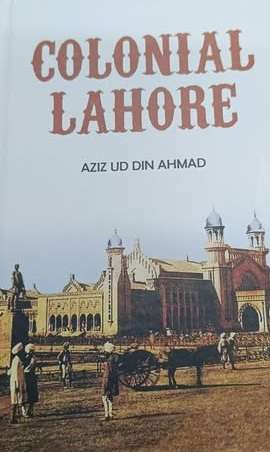
Professor Aziz ud Din Ahmad’s latest book “Colonial Lahore” covers the evolution of Lahore spanned over nearly one hundred years of the British rule. The panoramic range of the subjects and miniature details of the narrative are no surprise for those who have known Professor Aziz through the decades. He describes roads, gardens, buildings, institutions, personalities and the kaleidoscope of changing times with equal grasp over facts and chronological accuracy. Truly astonishing about this book is to discover a true lover of life beneath the carefully kept posture of a seemingly stoic intellectual. To many among us, his long-time companions, admirers and students, Professor Aziz ud Din Ahmad is a reticent philosopher who is absorbed in abstract questions of history, economics, politics, power and justice. In this brief tome, we have the pleasant surprise to meet a sage who has a soft eye for the trees and a warm heart for the birds of his beloved city of Lahore. That is the true beauty of a life where politics morphs into poetry. “Colonial Lahore” is a post-dated letter to the generations that will follow us mortals; children of Lahore who will, one day, marvel at how the rocky business of negotiating hard political times could fail to diminish the intellectual prowess of a clear mind and the passionate light of a lyrical heart.